There are events in the history of every nation that remain etched in memory for generations. Tragedies such as the Holocaust and the Holodomor the Great Famine in Ukraine, must never be forgotten.
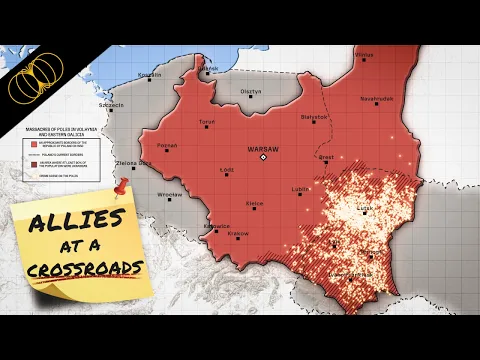
The Volhynia Massacre is one of those tragic chapters in history.
Why UPA
won't pass
in Poland
The leaders of the OUN-B, the organization that served as the ideological foundation of the UPA, envisioned a future Ukrainian state as an ethnically homogeneous nation. According to historical sources, they sought the complete, widespread, physical elimination of the Polish population.
Estimated Distribution of Victims of UPA Actions (1942–1954)
At the same time, available historical evidence indicates that the primary victims of the Ukrainian Insurgent Army (UPA) were Polish civilians. It is estimated that approximately 100,000 Poles were killed between 1943 and 1945.
A Matter of Contention
The Ukrainian authorities have frequently invoked the symbolism of the UPA and figures associated with it, presenting them as symbols of the country's struggle for independence and resistance to Russian domination.
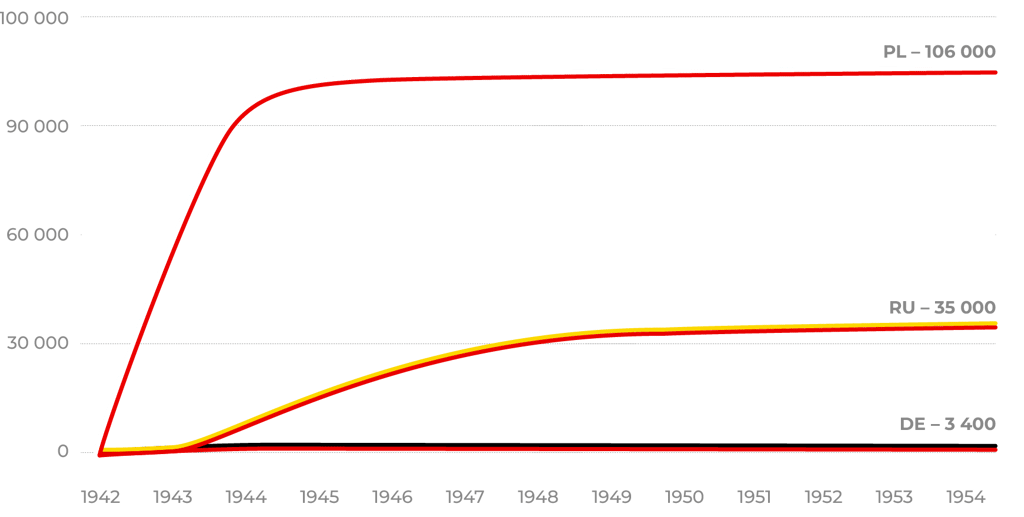
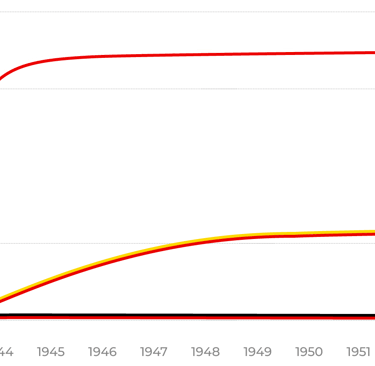
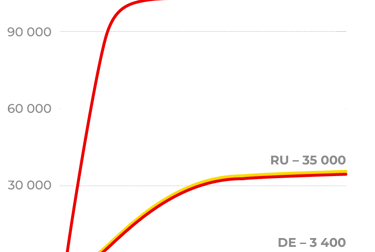
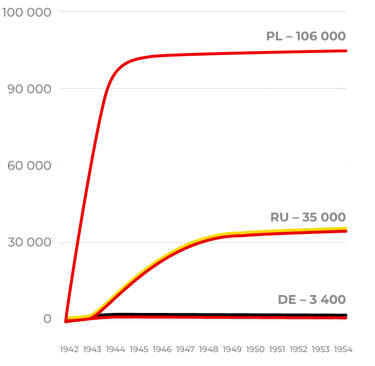
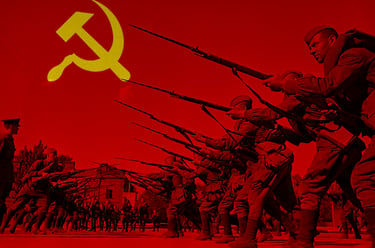
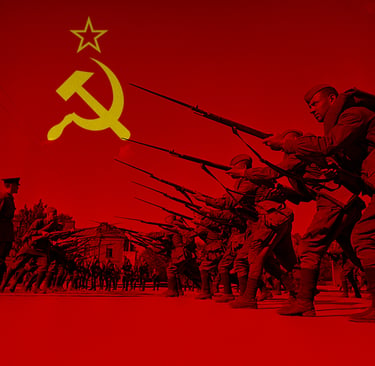
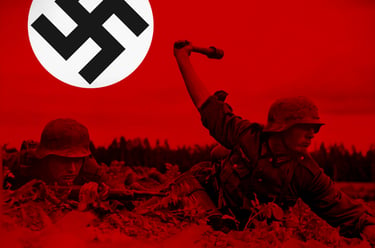
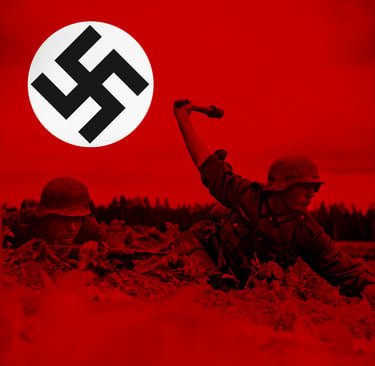
The scale of the UPA's operations against the Soviet Union was considerably smaller, while its armed struggle against Nazi Germany was limited in scope.
What continues to provoke outrage is not only the scale of the atrocities but also the methods employed by the perpetrators. UPA fighters not only killed their victims but often did so with exceptional brutality, intending to terrorize the local population.
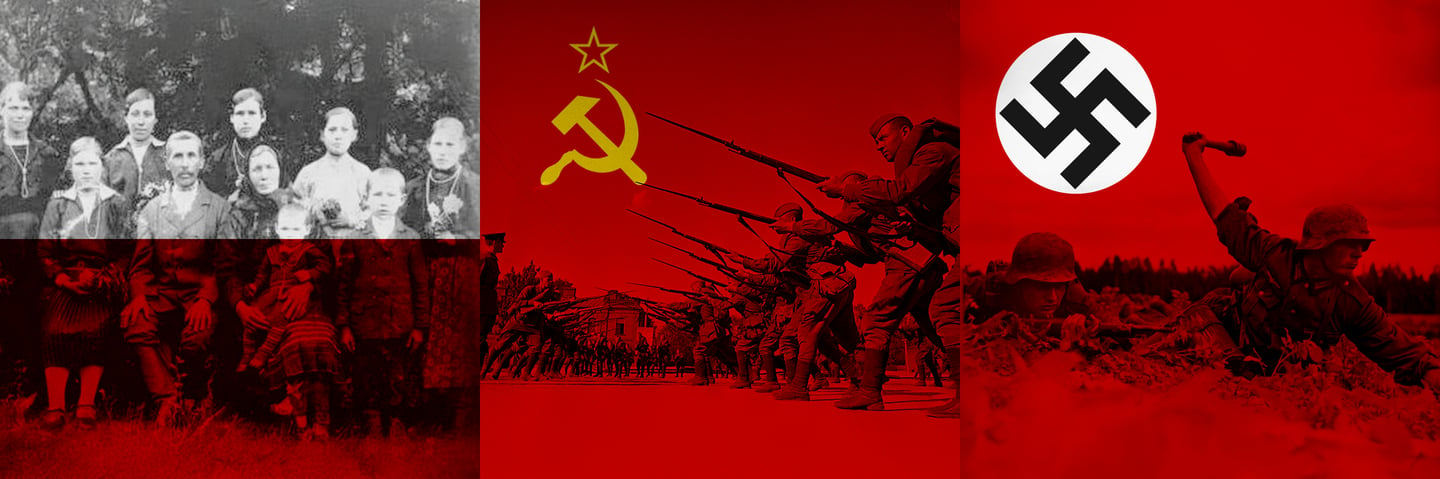
THOUSANDS OF POLISH CIVILIAN VICTIMS
100
THOUSANDS OF SOVIET MILITARY VICTIMS
THOUSANDS OF GERMAN MILITARY VICTIMS
3,5
35
In protest, Polish President Karol Nawrocki first suspended and later revoked the Order of the White Eagle, Poland's highest state decoration, which had previously been awarded to Volodymyr Zelenskyy by former President Andrzej Duda.
The decision drew widespread international attention, and the Volhynia Massacre became the subject of extensive discussion in Western media.
Euronews, FinancialTime, Associated Press, Reuters, Guardian, Le Monde, The Times, Al Jazeera
Context
On May 26, 2026, Ukrainian President Volodymyr Zelenskyy signed a decree granting the Independent Special Operations Center "North" the honorary title "Named after the Heroes of the UPA."
In Poland, the UPA is regarded as a criminal organization responsible for the murder of approximately 100,000 Polish civilians during the Volhynia Massacre in 1943.
Jared McBride,
"Peasants into Perpetrators: The OUN-UPA and the Ethnic Cleansing of Volhynia, 1943–1944", Slavic Review, Cambridge University Press.Timothy Snyder, Per Anders Rudling,
"Tarnished Heroes: The Organization of Ukrainian Nationalists in the Memory Politics of Post-Soviet Ukraine".Ivan Katchanovski,
"Ethnic Cleansing, Genocide or Ukrainian-Polish Conflict?
The Mass Murder of Poles by the OUN
and the UPA in Volhynia".
The principal "achievement" of the UPA during its twelve years of activity was the implementation of ethnic cleansing targeting the civilian population of Volhynia and Eastern Galicia.
Building a national narrative on the legacy of an organization that planned and carried out mass killings as a means of achieving its political objectives is bound to provoke opposition.
The glorification of the organization, its leaders, and an ideology associated with genocide will continue to face strong opposition from the Polish public.
The Ukrainian side has often sought to relativize the events in Volhynia, portraying them as a shared tragedy, a conflict in which both sides bore equal responsibility, or as a Polish–Ukrainian war. However, research conducted by international historians largely supports the Polish interpretation of these events.
Scholars such as Timothy Snyder, Jeffrey Burds, Jared McBride, and Ivan Katchanovski have explicitly described the killings as ethnic cleansing, arguing that the scale and nature of the atrocities leave little doubt about their moral and historical assessment.
In 1920, Józef Piłsudski and Symon Petliura attempted to establish an independent Ukrainian state during the Polish–Soviet War. Despite initial military successes, the effort ultimately failed.
After the Second World War, Jerzy Giedroyc and Juliusz Mieroszewski developed a new vision for Poland's eastern policy in the Paris-based journal Kultura. Their doctrine argued that supporting the independence of Ukraine, Lithuania, and Belarus was essential to Poland's long-term security.
Following 1989, the principles of the Giedroyc Doctrine were steadily implemented. In 1991, Poland became the first country in the world to recognize Ukraine's independence.
During the Orange Revolution, Polish Presidents Aleksander Kwaśniewski and Lech Wałęsa actively supported Ukraine's pro-European aspirations.
In 2012, Poland and Ukraine jointly hosted the UEFA EURO 2012 football championship, deepening bilateral cooperation and strengthening Ukraine's ties with the West.
In 2014, Poland strongly supported the participants of the Euromaidan protests and condemned Russia's annexation of Crimea and its aggression in the Donbas. Despite longstanding historical disputes, Poland remained for many years one of Ukraine's strongest advocates within the European Union and NATO.
Poland's Position on Ukraine
For more than a century, the existence of an independent Ukrainian state has been regarded in Poland as a matter of fundamental strategic importance.
In 2022, Poland became the first country to provide Ukraine with substantial armored military assistance, transferring nearly one-third of the equipment of its own armed forces during the first four months of the full-scale war. The aid included tanks, armored personnel carriers, air defense systems, and combat aircraft.
In March 2022, while Kyiv remained under siege, Polish Prime Minister Mateusz Morawiecki, together with the prime ministers of the Czech Republic and Slovenia, became the first foreign leaders to visit the Ukrainian capital after the Russian invasion.
At the same time, Poland became a refuge for millions of Ukrainian refugees. Polish society responded with an unprecedented wave of grassroots support, providing accommodation, transportation, financial assistance, and other forms of humanitarian aid.
To this day, Poland remains one of the principal logistical hubs for military and humanitarian assistance to Ukraine and continues to advocate for keeping Ukraine among the highest priorities of Western governments.
Poland unequivocally supports Ukraine.
At the same time, it cannot forget the victims of the Volhynia Massacre or accept the glorification of the organizations and ideologies responsible for crimes committed against its citizens.
2026
PL/UA